1. Automated Road Defect Detection Using Dash-cams & Drones
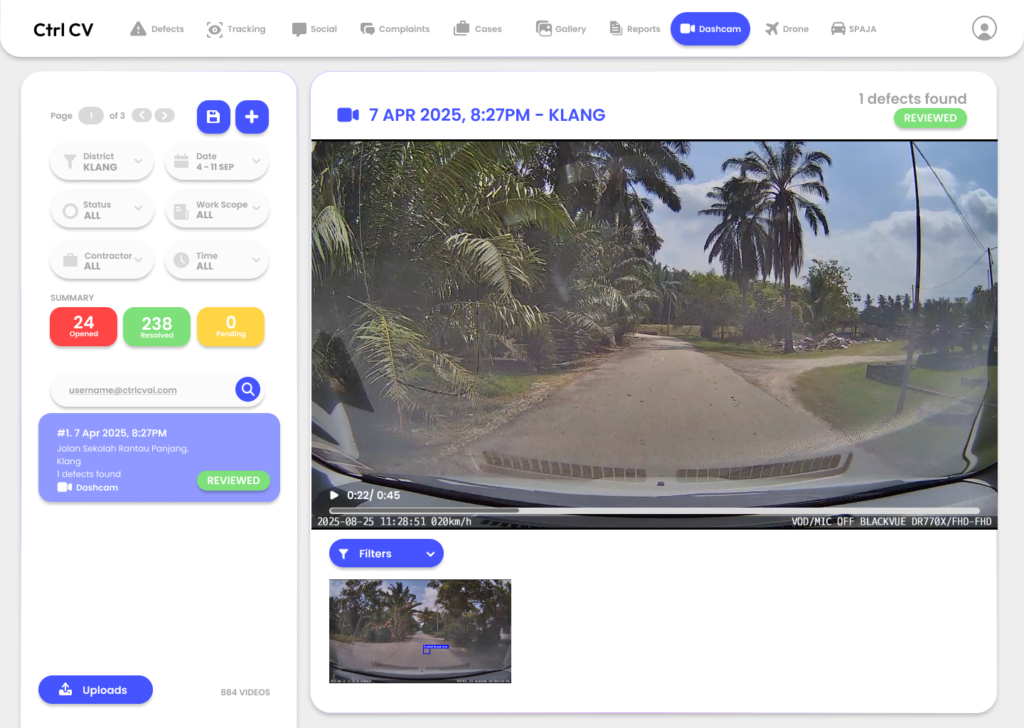
Instead of sending teams to manually inspect thousands of kilometres of roads, we utilize Artificial Intelligence (AI) to scan 70 TB of road videos from dash cams and drones. This system automatically detects a wide range of road defects, including potholes, cracks, faded road lines, damaged road assets, and drainage blockages. Inspecting the whole state of Selangor, with an area of approximately 8000 km2, can traditionally take months and requires large manpower teams.
Our system, however, can process the entire road network in just days. In the future, inspecting the whole of Malaysia will not be a logistical challenge, but a rapid, data-driven process that ensures safer, better-maintained roads for all citizens.
2. Smarter AI That Can Tell Look-Alike Objects Apart
CtrlCV ensure that look-alike features is distinguishable from each other by developing an advanced clustering-based recognition system that reliably distinguishes real potholes from similar objects, improving overall precision by 14% and delivering far clearer, more trustworthy reporting. The system also improves continuously through an automated training pipeline where new detections are refined by experts and fed back into the model, ensuring accuracy increases over time. This makes the AI smarter, more reliable, and significantly more aligned with real-world road conditions.
3. Drone-Based Drainage Assessment at Scale
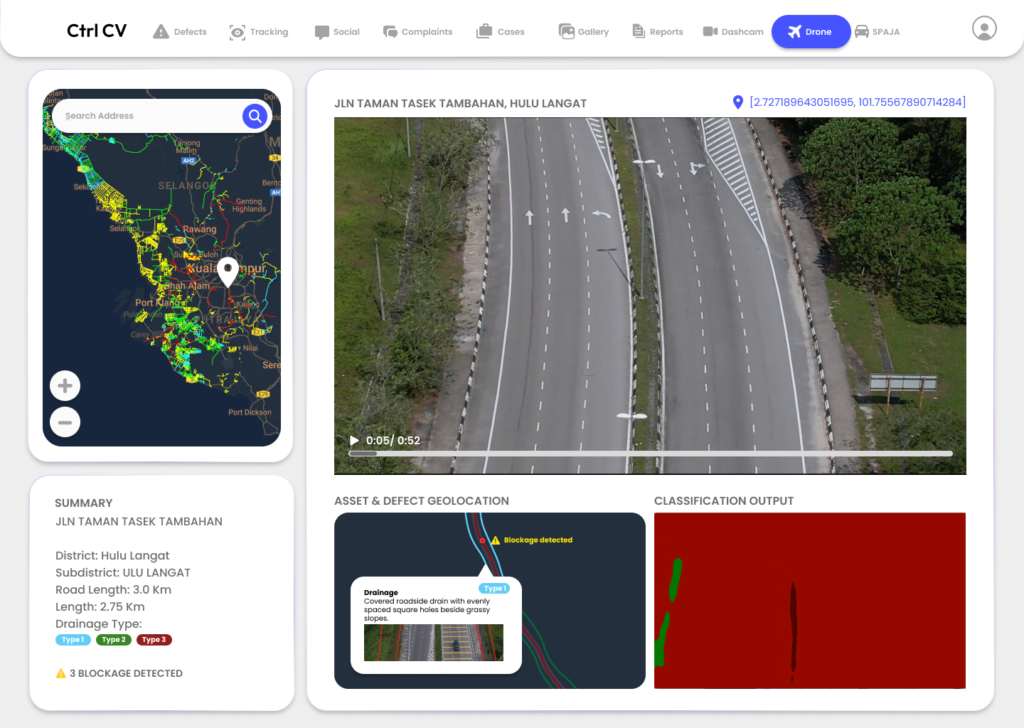
Manually inspecting drainage systems is challenging because the assets are spread out across vast areas, many are located in hard-to-access spots, and reviewing hours of drone footage is extremely time-consuming. Our AI solves this by automatically analysing drone videos to pinpoint critical drainage issues such as blockages, structural cracks, overflow risks, heavy vegetation, and debris buildup. Crucially, every issue is instantly mapped using precise geolocation, and blockages are displayed as clear alarms on a digital map. This gives contractors and maintenance teams a clear, visual overview of the entire drainage network, allowing them to make the most accurate decisions on priority repairs. By monitoring these risks in real-time, our system enables authorities to predict when a flood might occur and take immediate, targeted action to prevent it.
4. A Central Digital Platform for All Road Information
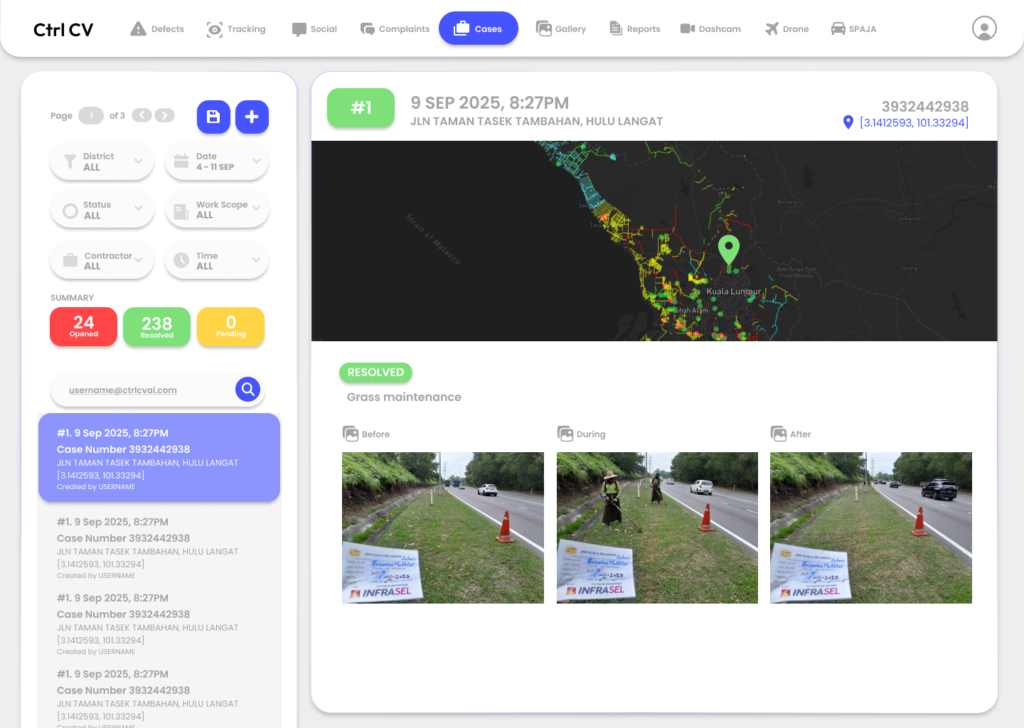
Our AI-driven solution doesn’t just find defects; it revolutionises how road maintenance is managed. All critical data including the detection images, precise GPS locations, and inspection notes are sent immediately to one centralised system.
This single platform provides Infrasel teams with a real-time map of all current road issues and an interactive dashboard to monitor district performance. This system acts as the “single source of truth”, eliminating the chaos of scattered spreadsheets, paper reports, or fragmented communication via messaging apps. It also houses complete, digital records of every defect and its repair history, alongside digital tools for scheduling and tracking maintenance work. The result is faster communication between authorities and contractors and the automatic generation of comprehensive inspection reports, streamlining operations and ensuring every repair decision is based on the most accurate, up-to-date information available.
5. From Reactive to Proactive Maintenance
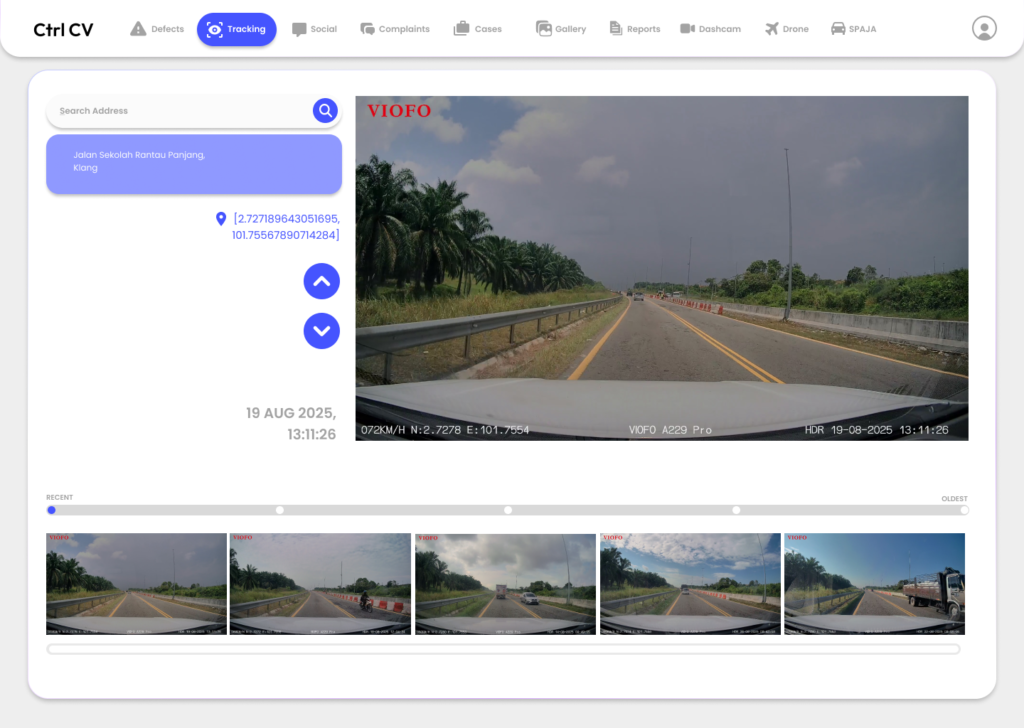
Instead of treating each road defect as a one-time event that requires immediate, reactive repair, our system provides the critical ability to track the entire progression over time. By continuously monitoring the same road segments, maintenance teams gain valuable insights into when a defect first appeared, whether it is getting worse, and how fast it is expanding. This shift from simple detection to predictive tracking allows authorities to determine precisely when a defect should be repaired before it becomes dangerous . This capability is the cornerstone of preventive maintenance, solving the everyday problem of escalating costs: it helps avoid the high repair costs associated with late intervention on severe damage, and it empowers authorities to plan their budgets more effectively by prioritising repairs that will yield the maximum long-term benefit.
6. AI Chatbot for Instant Answers
Accessing critical maintenance data is made simple and instantaneous with our integrated AI Chatbot. Instead of having to spend hours searching through scattered digital files or waiting on calls to supervisors, Infrasel’s team can now simply ask the system questions just like they would ask a virtual assistant like Siri.
This intelligent chatbot is engineered to quickly and easily search through the massive volume of data collected, over 70 TB of images on demand. Team members can instantly query the system with requests such as: “Show me all potholes in Selangor District,” “What is the total number of defects this month?”, or “Generate a chart of drainage issues from drone inspections.” This capability saves countless hours of manual checking, makes complex maintenance data accessible to everyone, and fundamentally improves decision-making by providing instant, easy-to-understand insights.
Our system represents the future of infrastructure management. By integrating AI-driven detection, reliable cluster analysis, and a centralized platform, we transform reactive maintenance into proactive, budget-friendly planning. We don’t just find defects; we provide the instant, accurate insights needed to prevent failures and ensure the reliability of Malaysia’s entire road network. Smart roads start here.