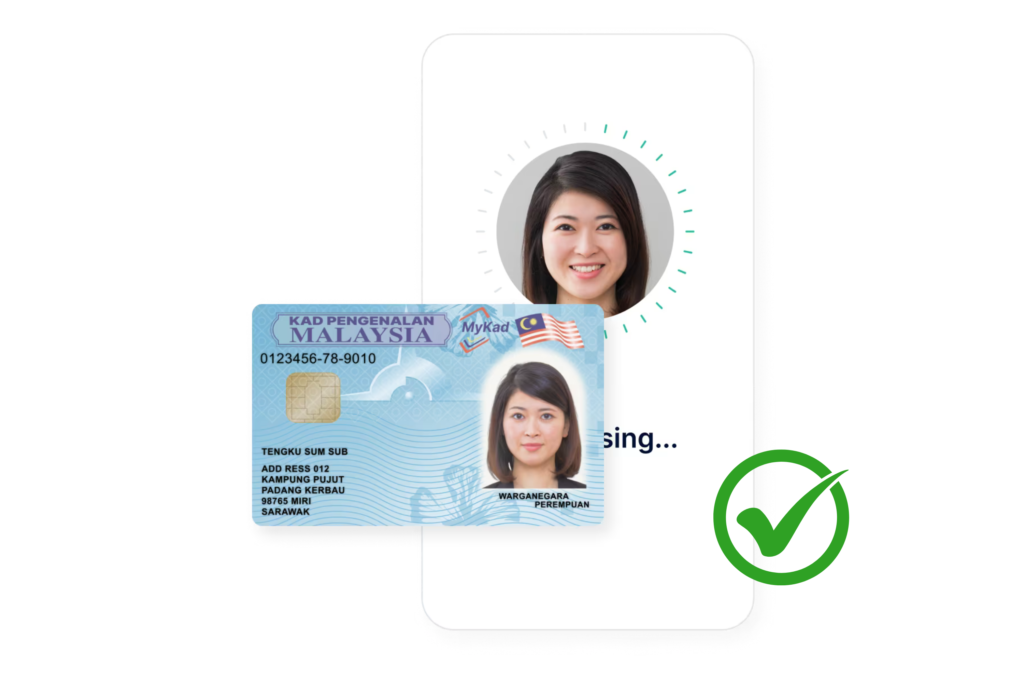
1. Heat map-Based Corner Detection for Reliable IC Localisation
Instead of relying on brittle contour methods, CtrlCV developed a heatmap-based keypoint model powered by a FastViT backbone and multi-scale feature fusion. The model accurately identifies all four IC corners even when they are blurred, occluded, or poorly lit by predicting probability heatmaps rather than single coordinates. This robustness ensures precise geometric inference across 215,000 real-world eKYC samples, enabling clean, standardised IC crops that dramatically improve downstream OCR accuracy.

2. Automatic Orientation Normalisation
User-captured photos may be rotated in any direction, making OCR impossible without correction. Our orientation module evaluates all eight possible orientations and selects the correct one by comparing each candidate against an averaged IC reference template. This ensures that every processed IC is upright, front-facing, consistently aligned, before extraction, which instantly resolving a major portion of OCR failures caused by upside-down or sideways captures.
3. Perspective normalisation & Geometric Correction
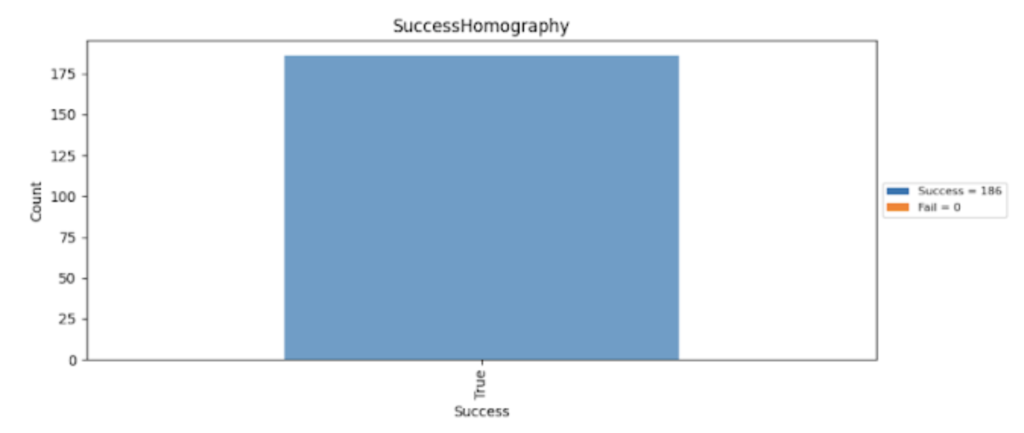
With corner locations identified, our system applies homography reconstruction to warp the IC into a clean, top-down view. This eliminates skew, tilt, and perspective distortion entirely, giving OCR a perfect canvas to work on. Evaluation results show 100% homography success rate on the held-out test set, demonstrating geometric stability even under challenging conditions.
4. Intelligent Fallback system for Edge cases
ICs with severe occlusion, missing corners, extreme blur, glare, or partial cropping may occasionally fail heat map detection. To maintain stability, the pipeline automatically switches to a colour-based segmentation fallback. This guarantee continuity and ensures the system never fails silently, preserving the downstream operability. CtrlCV’s IC detection and alignment module provides MPay with a production-ready solution built specifically for the realities of Malaysian eKYC workflows. We utilise the computer vision method that handles blurry, tilted and occluded IC images.
5. Automated OCR field Extraction
After alignment and perspective correction, CtrlCV’s OCR engine extracts all key textual fields from the IC with significantly higher accuracy. The improved geometry and clarity of the input image reduce character errors, increase field-level recall, and eliminate many manual verification steps. This module supports extraction of all fields on IC which include IC number, name, address, gender, nationality and east Malaysia status. The combined effect is a far more reliable, automated extraction pipeline that replaces manual data entry and reduces operational overhead.
6. Landmark-Based IC Authenticity Verification
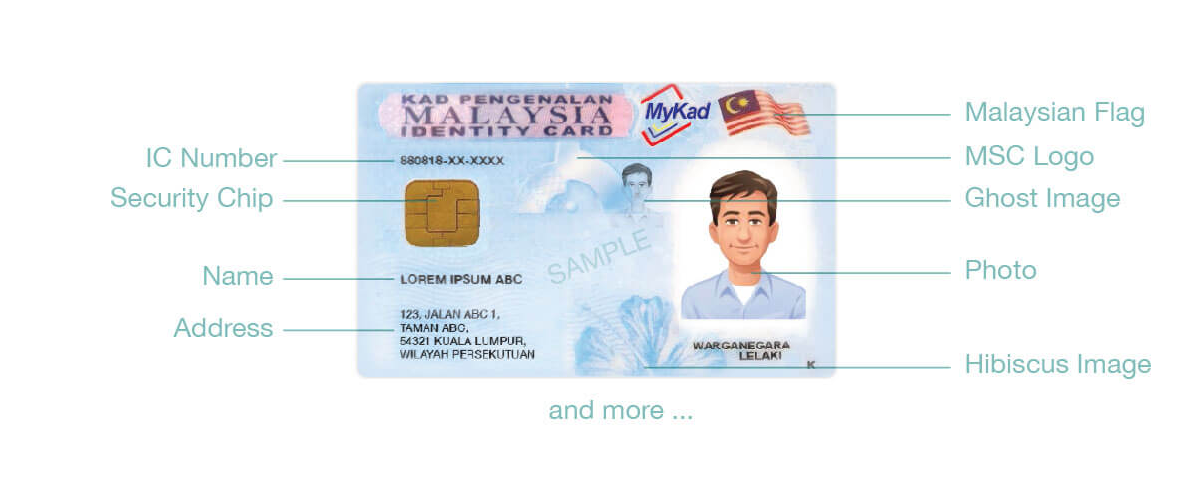
To determine whether an IC is genuine, the system analyses structural and geometric landmarks printed on Malaysian identity cards. By learning the precise locations, proportions, and spatial relationships of official IC landmarks logos, hologram regions, micro text zones, photo position, and geometric layout, the model can detect anomalies caused by tampering, reproductions, or digitally manipulated cards. This allows MPay to automatically flag suspicious submissions, improving security and reducing fraud risk in the eKYC process.
7. Face-IC cross verification
Ensuring that the person holding the IC is the same person depicted on the card is a critical component of secure eKYC. CtrlCV introduced a dual-module verification system that:
- Matches the IC photo to the user’s selfie or live capture using face embedding comparison.
- Performs liveness checks to confirm that the face belongs to a real human, not a printed photo or screen replay.
Together, these capabilities allow MPay to verify identity with higher confidence and automatically reject attempts using fake ICs, impersonation, or spoofed images.